Pilonidal Sinus Surgery is performed to treat a pilonidal sinus, a small tunnel or cavity that develops in the skin near the tailbone, usually at the top of the buttock crease. The condition commonly occurs due to ingrown hairs and repeated friction in the area. Surgical treatment helps remove the infected tissue, prevent recurrent infections, and provide long-term relief.
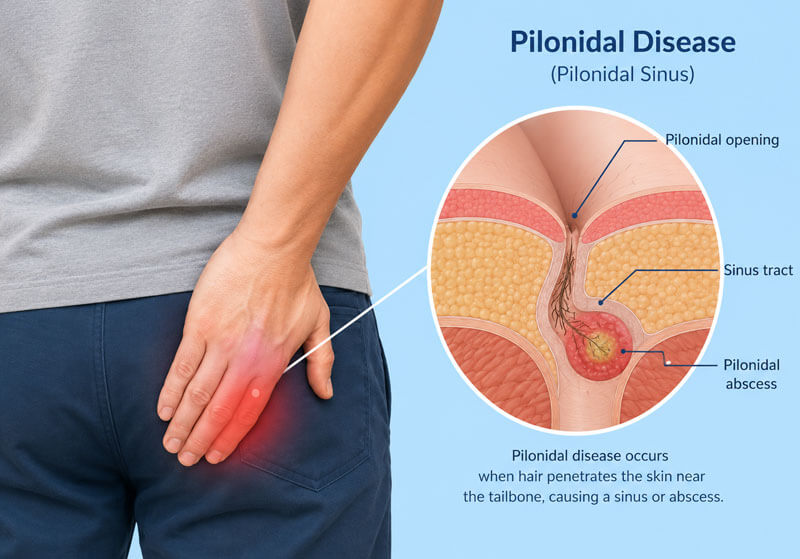
A pilonidal sinus is a chronic condition in which hair, debris, and bacteria become trapped beneath the skin, leading to inflammation and infection. It is more common in young adults, especially those who sit for prolonged periods or have excessive hair growth in the affected area.
Symptoms can range from mild discomfort to painful infections that interfere with daily activities.
While acute infections may initially require drainage and medication, surgery is often recommended for persistent or recurrent pilonidal sinus disease. Definitive treatment aims to remove the sinus tract and reduce the chances of recurrence.
Several surgical techniques are available depending on the extent of the disease. These may include excision of the sinus tract, flap procedures, or minimally invasive approaches in selected patients. The choice of treatment is individualized to achieve optimal healing and minimize recurrence.
Recovery depends on the type of procedure performed and the extent of the disease. Proper wound care and hygiene are important for successful healing. Patients are also advised to keep the area clean and follow instructions regarding hair removal if recommended.
Regular follow-up appointments help monitor healing and reduce the likelihood of recurrence. With appropriate treatment and aftercare, most patients experience significant improvement and long-term relief from pilonidal sinus disease.