Benign Breast Lesion Surgery is performed to remove non-cancerous breast lumps or abnormalities that may cause symptoms, increase in size, or require definitive diagnosis. While most benign breast lesions are not life-threatening, surgical removal may be recommended to relieve discomfort, address cosmetic concerns, or eliminate uncertainty regarding the nature of the breast abnormality.
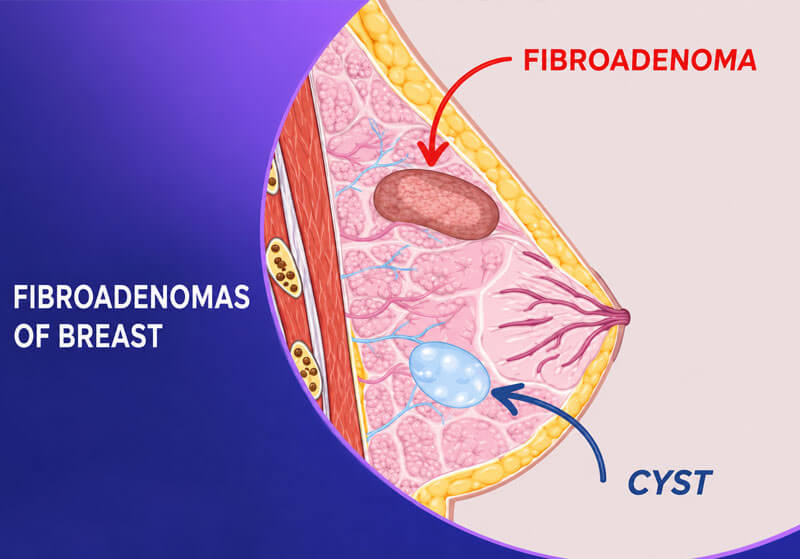
Benign breast lesions are non-cancerous changes within the breast tissue. They are relatively common and can occur in women of all ages. Many lesions are discovered during routine examinations or imaging studies and often do not require immediate treatment unless they become symptomatic or show concerning features.
Surgery may be considered when a breast lesion causes persistent symptoms, continues to grow, or when imaging and biopsy findings indicate the need for complete excision. In some cases, patients may choose removal for peace of mind or cosmetic reasons.
The decision is individualized after careful assessment of the lesion, patient preferences, and overall breast health.
Before recommending surgery, a detailed evaluation is carried out to accurately characterize the lesion and exclude malignancy. This process helps determine the most appropriate treatment strategy.
The surgery is usually performed as a day-care procedure under local or general anesthesia, depending on the size and location of the lesion. The surgeon carefully removes the abnormal tissue while preserving the surrounding healthy breast tissue as much as possible.
Whenever feasible, incisions are planned to minimize visible scarring and maintain the natural contour of the breast. The removed tissue is typically sent for pathological examination to confirm the diagnosis.
Surgical removal offers both diagnostic and therapeutic benefits. It can eliminate troublesome symptoms, provide definitive tissue diagnosis, and reduce anxiety associated with persistent breast abnormalities.
Most patients recover quickly after benign breast lesion surgery and can resume routine activities within a short period. Mild swelling, tenderness, or bruising may occur temporarily and generally resolves as healing progresses. Regular follow-up appointments help ensure optimal recovery and allow review of the final pathology results. With appropriate care, patients can expect excellent functional and cosmetic outcomes.